Table Of Content

Akzidenz Grotesk Spesimen font is their selected typography in the industrial sector especially. The Museum für Gestaltung Zürich is the leading Swiss museum for design and visual communication. Its internationally acclaimed collection comprises over half a million objects representing the history of graphic and industrial design. The Museum für Gestaltung Zürich, which is part of the Zurich University of the Arts (ZHdK), is actively involved in research and teaching and regularly produces its own publications. Many famous brands have updated their logos from sans-serif to serif typefaces, as the shift to digital interfaces demands readable logos both on print and on screens. Designed by Adrian Frutiger in 1954 and ultimately released in 1957, Univers is a sans-serif typeface that served to update the almost 50 year old Akzidenz Grotesk.
Digital Silk
Vinh is famous for his advocacy of the use of grid systems and is often quoted as an authority on the subject. In the early 1970’s he designed the Paris Metro signature with a variation of Univers, he was then asked to design the ‘way-finding signature’ for Paris Charles de Gaulle International Airport. Probably the most influential typeface for this movement, Akzidenz-Grotesk was released by the Berthold Type Foundry in 1896 and was arguably the first of its kind. It soon became one of the most widely used typefaces and was even sold in the U.S. under the names “Standard” or “Basic Commercial.” If that doesn’t shout “FIRST!
Top 10 CMS Development Companies For Streamlined Digital...
Avoiding distracting elements leads to a better user experience, as users can focus on the task at hand, such as completing relevant actions or consuming content. Around the same time, constructivism was founded to use art to make useful things for everyday life, emphasizing function and form. Some figures that we consider to be the founders of constructivism include artist Alexander Rodchenko and painter Vladimir Tatlin. Swiss Style emerged in the 1940s and later gained widespread international recognition in the 1950s and 1960s.
The Yard Creative
Each designer brings their unique individual strengths to the team, but when it’s time to get down to designing all of them put their individual strengths together to ensure that their creations work across various platforms. Clients have described their work as clean, clear, contemporary, and colorful. While design for print, specifically packaging, is still their first love, they’ve expanded their list of design-related services to include web design and branding. It is a creative brand consultancy that’s been solving brand and business challenges for its clients since 1979.
Just ask Cyrus Highsmith who tried to spend a day without Helvetica in New York City, only to realize that it was nearly impossible. The use of Helvetica might not define International Typographic Style, but its everywhere presence is a constant reminder of the impact those radical Swiss have in our everyday lives. About 125 miles northeast of Hofmann and Ruder’s School of Design, Max Bill and Otl Aicher opened their own school in Ulm, Germany. These teachings fell into step with the objectivity and readability of the International Typographic Style, which aims to create content that is easily recognized and understood by anyone who views it. The layouts of this template can be easily mixed to create custom layouts. The minimal design allows for your content to shine, so pair it with a strong sans serif font and you'll be on trend.
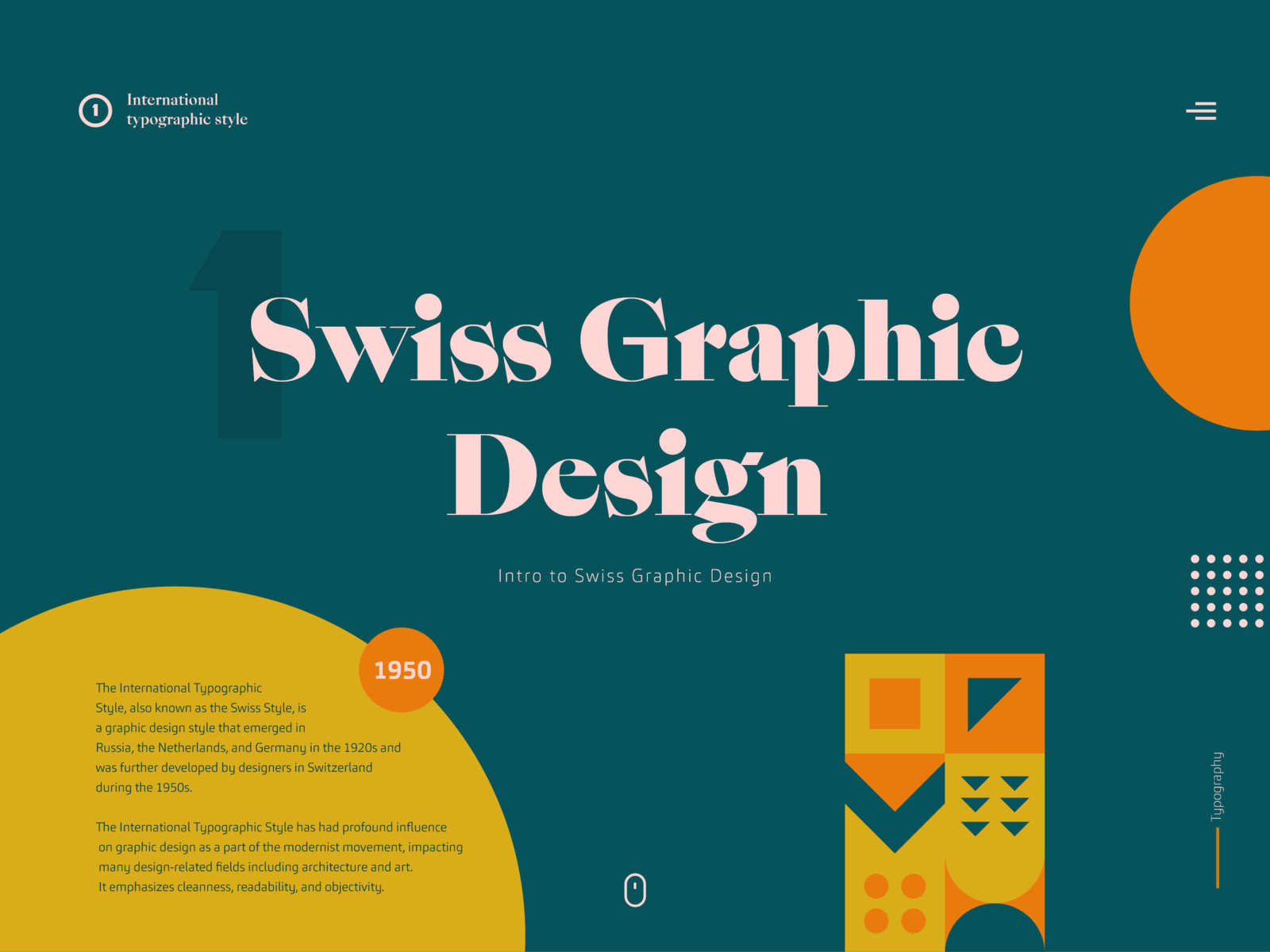
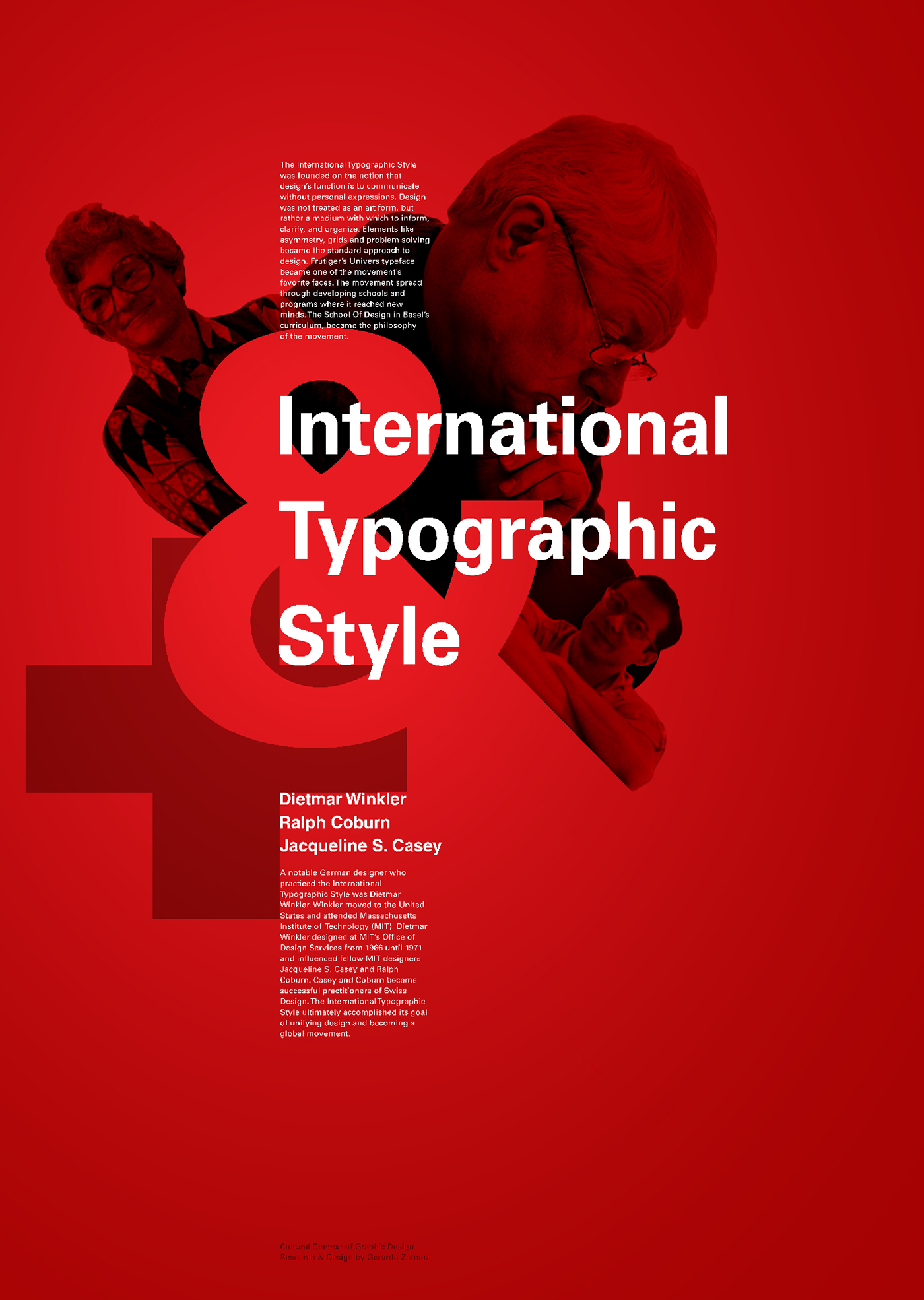
The Chase has more than 30 years of industry experience and more than 350 national and international awards, making them one of the most decorated creative consultancies in the world, and has drawn attention for its innovative corporate branding and print design. The Chase offers a range of services like museum exhibits, calendar design, and sports stadium branding. It focuses on web design, marketing, and SEO, offering everything most companies need to build a brand and get ahead of the competition.
The high modernist style that started developing in Russia, the Netherlands and Germany in the 1920s was an inspiration for Swiss Design. From around 1914 to 1940, design styles like Suprematism and Constructivism, The Bauhaus school, and De Stijl were prominent all over Europe. Russian Suprematism and Constructivism was inspired by the revolution and the socialist era.
Whether you need help with a business logo or printed marketing material or a website, they combine their creative flair with professional performance to create memorable and unique designs. Moburst digital marketing and web development agency, offers a range of services focused on campaign conceptualization and design. They create impactful concepts that effectively reach the target audience, considering the right timing and platform for each message. The agency’s concept and design experts work collaboratively with clients to build a foundation for success. Their service offerings include graphic design, and their army of creators create graphics for any purpose, whether for a website or any social media channel.
25 exciting female graphic designers and illustrators to follow this International Women's Day - Creative Boom
25 exciting female graphic designers and illustrators to follow this International Women's Day.
Posted: Mon, 08 Mar 2021 08:00:00 GMT [source]
Swiss Style prefers staying on the grid
These designs acted as independent visual/verbal statements about such topics as assassinations and civil rights. Several major directions emerged in American graphic design in the 1960s. Political and social upheavals of the decade were accompanied by a resurgence of poster art addressing the civil rights movement, the women’s movement, environmentalism, and the Vietnam War. Müller-Brockmann studied at the Zürich Kunstgewerbeschule and years later returned as a professor, succeeding Ernst Keller.
Behind the MIT Technology Review redesign - MIT Technology Review
Behind the MIT Technology Review redesign.
Posted: Thu, 21 Jun 2018 07:00:00 GMT [source]
The 1950s saw the distillation of International Typographic Style elements into sans-serif font families such as Univers. Univers paved the way for Max Miedinger and collaborator Edouard Hoffman to design the typeface Neue Haas Grotesk, which would be later renamed Helvetica. The goal with Helvetica was to create a pure typeface that could be applied to longer texts and that was highly readable. The movement began to coalesce after a periodical publication began in 1959 titled New Graphic Design, which was edited by several influential designers who played major roles in the development of International Typographic Style. The format of the journal represented many of the important elements of the style—visually demonstrating the content—and was published internationally, thus spreading the movement beyond Switzerland's borders.
From the 1940s through the 1960s, New York City was a major centre for innovation in design as well as the fine arts. Jan Tschichold became a leading advocate of modernist design after visiting the Wiemar Bauhaus exhibition in 1923. His most famous work is the book Die neue Typographie which organised most of the modernist design principles. He went to England in 1947 were he was wired to Penguin Books and directed the creation of the famous Penguin Composition Rules. In many aspects, these ideas touch on the core proposals of the De Stijl movement.
She moved to Los Angeles in 1985 to take the position as graphic design program director at CalArts. “For me, the feeling of working in California was that there were wider possibilities for form, that there wasn’t the allegiance to corporate, International Style Modernism as there was on the East Coast,” says Wild. The heyday of the International Style in the 1950s also coincided with some of the biggest concerted endeavors worldwide towards urban planning, a process that in large part proved devastating to established communities by destroying the organically-evolving urban fabric. The confining, often drab character of much International Style architecture became a symbol of the blight produced by such efforts where arguably none had existed before. Even its most ardent champions such as Philip Johnson eventually turned against it - witness, for example, his AT&T (now Sony) Building in New York (1978), with a roofline reminiscent of a Chippendale highboy. We believe art has the power to transform lives and to build understanding across cultures.




No comments:
Post a Comment