Table Of Content
De Stijl was an art and design movement characterized by the use of simple geometric shapes, primary colors, and a focus on abstraction. It aimed to achieve visual harmony and universality through minimalist design principles. The founders of the De Stijl movement were painters Piet Mondrian and Theo van Doesburg. Swiss Style revolutionized the graphic design world by heavily emphasizing its design principles and unique elements. In this article, we’ll explore the history of how Swiss Style rose to prominence, the key principles and elements of the design movement, and its relevance in today’s modern design landscape.
Canada Modern is an archive of modernist graphic design from 1960 to 1985 - It's Nice That
Canada Modern is an archive of modernist graphic design from 1960 to 1985.
Posted: Wed, 01 May 2019 07:00:00 GMT [source]
Simple Fashion Magazine (INDD)

Originally released by Danberry & Peignot in 1957, the family passed through the hands of the Haas Type Foundry before being purchased in 2007 (along with all of Linotype) by Monotype. The Bauhaus mantra of 'form follows function' applies to design in the spirit of the International Typographic movement. All of these movements including the International Typographic styles are defined by reductionist purity as a visually compelling strategy of conveying messages through geometric and color based hierarchies.
Stop guessing about your digital experience with LogRocket
Wilsonminer is the home of Wilson Miner, designer and co-founder at EveryBlock. Miner worked on the first major redesign of Apple and designed the identity (and the admin interface) of the Django web framework. Subtraction is the personal web site of Koi Vinh, the Design Director at NYTimes.
Swiss School
The final stage in the poster design is the manipulation of the discovered textures and colors into an image that communicates an immediate yet complex message. When complete, it reads both as an art image and as a source of specific information. “Traditional graphic design, whether of the loose, American kind or disciplined, Swiss manner, is more concerned with the nature of the printing process than it is with visual and philosophical ideas.
According to the Swiss movement, adding more elements without fully exploring the potential of the fundamental ones can be considered a ‘waste’. As these basic elements, like typography, have so much aesthetic potential, there’s rarely a need for other visual graphics elements. Even a quick study of classic Swiss style works reveals a strong attention of graphic designers to uniform design elements and strong geometric shapes. Graphic artists have experimented with abstract geometric patterns, uncomon color combinations, text manipulations and striking abstract visuals that were used to clearly convey their purpose in a very remarkable way. Charlie Smith Design boasts more than 18 years of experience and offers a wide range of graphic design services that include book design, packaging and identity design. Pearlfisher is an independent graphic design agency with offices in London and boasts over 20 years of experience.
thought on “The International Style & Modern Graphic Design”
It’s still currently used in user interfaces, mobile apps, and websites all over the world due to its effects of simplicity and ease of use. It’s a design language that evolved from the core design principles of Swiss Style, and it might become the predecessor to another design movement in the future. As I mentioned earlier, Swiss Style emphasized objectivity and neutrality in its designs. In today’s digital landscape, many companies measure their designs based on objective performance metrics, opting for unbiased data to improve their user experiences.

Photography
Meanwhile in Holland, artists like Theo von Doesburg and Piet Mondrian established a movement that came to be known as De Stijl (or simply “the style”). Spanning architecture, painting and graphic design, De Stijl’s principles were rooted in mathematics and grid forms that served as compositional tools. When Swiss Style graphic designers advocate the use of sans-serif typefaces, they weren’t paying attention to the historical legacy and experimented with something new. If there’s one single lesson from the Swiss Style it is to love and respect typefaces. The basis for the formation of a new classical system was the creation of new fonts – first of all, simple sans-serif typefaces. This process was supported by Max Miedinger and his colleague Eduard Hoffmann.
What exactly is Swiss Design, anyway?
The use of simple fonts became a distinctive feature of the Swiss school and a marker of new design. Philip B. Meggs‘ History of Graphic Design explains that International Typographic Design begins with a mathematical grid. These grids are considered to be the “most legible and harmonious means for structuring information.” Using a grid for design makes creating a hierarchy for the content much easier—think web design. They are clear-cut and work well with ratios (Rule of Thirds, Golden Ratio, etc.). In addition to the grid, Swiss Style usually involves an asymmetrical layout, sans serif typefaces and the favoring of photography over illustrations.
Russian Suprematism and Constructivism
“Helvetica became a national brand, an identity for the popular ‘Swiss style’…” Smashing Magazine writes. In the creative process, accepting constructive criticism is equally indispensable. Only some initial designs are a hit; some ideas need fine-tuning, irrespective of the designer's skills. It's a comprehensive page showcasing the agency's successful projects arranged by logo designs, brand identities, rebrands, logo redesigns, and graphic and web design work. Each category has multiple case studies that have thorough details of the challenge, the solution, and the project result.
The importance of Helvetica cannot be underestimated; the typeface is endlessly useful for everything from signage (look at the New York City subway, for example) to web pages to logos. But to really understand it, one must understand the greater tradition of Swiss Design. Indeed, for many people, Swiss Design is basically synonymous with Helvetica—the very name of which in fact means “Swiss” (in Latin, Switzerland was the Confederatio Helvetica)—which was designed in 1957 and hit the market in 1960. The great visual impact of this site are the big photographs that stand from the background.
Amazingly, this attempt at collaboration did not seem to taint his standing amongst designers and critics in the postwar era, when he largely steered clear of politics. Much like Swiss Style, flat design leverages 2D elements and grid systems to create minimalist, geometric designs. Flat design also incorporates sans serif fonts that embrace Swiss Style’s principles of clarity and readability. By reducing clutter and focusing on simplicity, both flat design and Swiss Style aim to present information objectively.
Whether working with a startup or an established brand, Clever Code Lab is the go-to partner for creating captivating and memorable online experiences that resonate with users and drive engagement. Clever Code Lab offers artful illustrations, animations, videos, and all graphical elements to create brand identities and activate brand experiences. Their Graphic Design services are comprehensive, covering everything from decks to marketing collateral and infographics. They specialize in creating compelling Investor Decks, Real Estate Showcases, Investor Updates, and Keynote Presentations.
Similar to geometric shapes and figures, sans-serif fonts are single stroked, bold and direct. The most frequent typeface in Swiss Style is Helvetica because of the simplicity of it. Helvetica typeface uses straight lines and curves, which go hand in hand with the whole idea of the Swiss Style simplicity. A grid system is a rigid framework that is supposed to help graphic designers in the meaningful, logical and consistent organization of information on a page. Rudimentary versions of grid systems existed since the medieval times, but a group of graphic designers, mostly inspired in ideas from typographical literature started building a more rigid and coherent system for page layout. The core of these ideas were first presented in the book Grid Systems in Graphic Design by Josef Müller-Brockmann which helped to spread the knowledge about the grids thorough the world.
Max Bill, another pioneer, brought a purist approach to design that he had been developing since the 1930s. He was instrumental in forming Germany’s Ulm School of Design, famous for its ITS approach. Max Huber, a designer known for his excellent manipulation of presses and inks, layered intense colours and composed chaotic compositions while maintaining harmony through the use of complex grids that structured and unified the elements.
Their process ensures their team thoroughly understands your brand’s voice so they can properly communicate and produce content. Of course, being a social media agency, they then use the content they have created, looking at the numbers to get legitimate results, observing how they grew, and understanding how to improve future campaigns. Trusted by creative and marketing teams of hundreds of fast-growing companies, Duck.Design offers various design-related services. With regards to graphic design specifically, they can help with website illustrations, ad creatives, banner ads, logo design, blog graphics, packaging, and more. Unlike many other agencies that charge an hourly or fixed fee rate depending on the brief, Duck.Design opts for a transcription model.
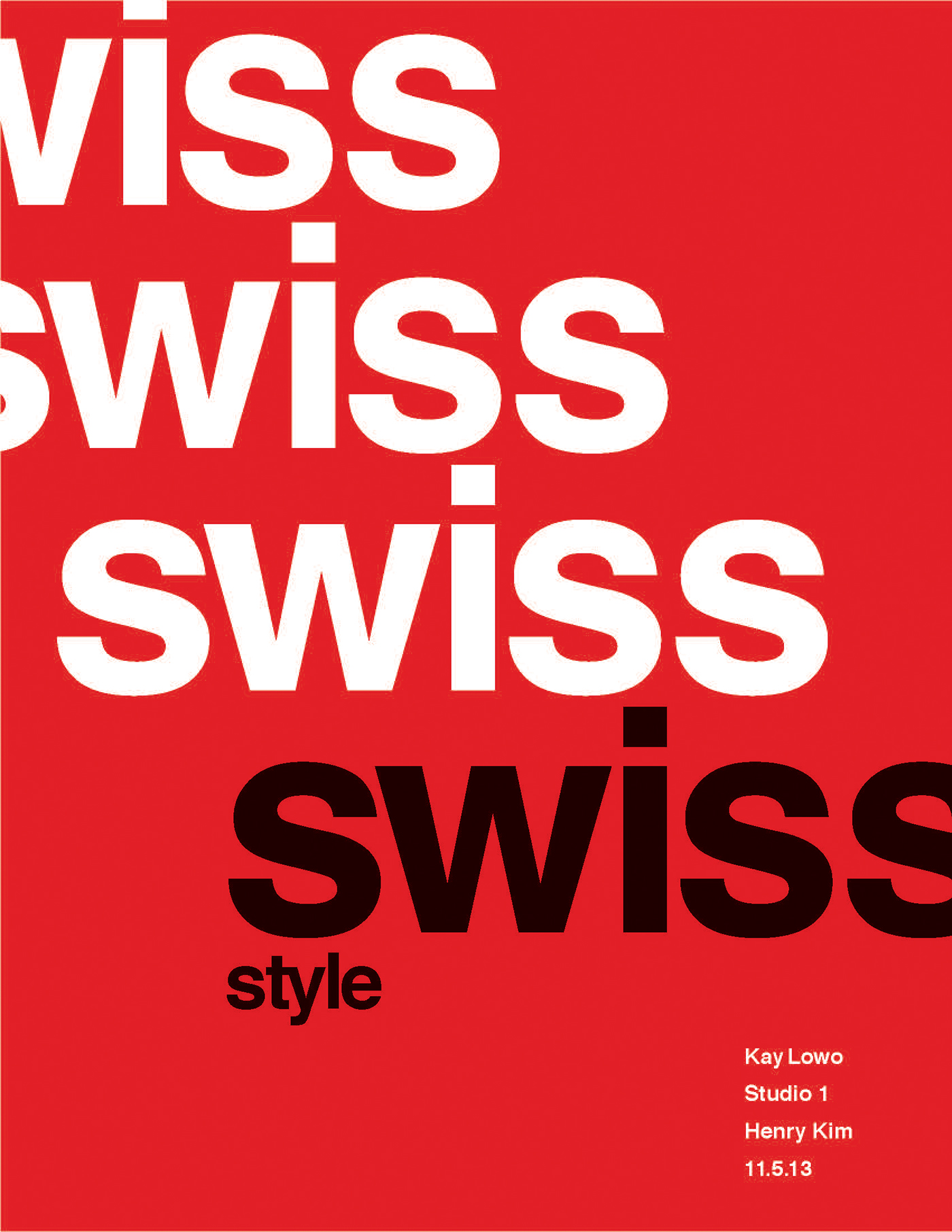
The birth of graphic design as such can be dated to the 19th century, when “arts and crafts” and the “applied arts” first began to distinguish themselves from so-called “fine art” (i.e. painting, sculpture and architecture) and establish independent institutions of study. If you’re a designer in the 21st century, chances are you’ve studied the International Typographic Style (more commonly known as ‘Swiss Style’). Let’s take a moment to honor some of modern design’s most influential principles, typefaces and artists who started this central-European trend.




No comments:
Post a Comment